
Playtest Rules: Fear, Trauma, and Convalescence
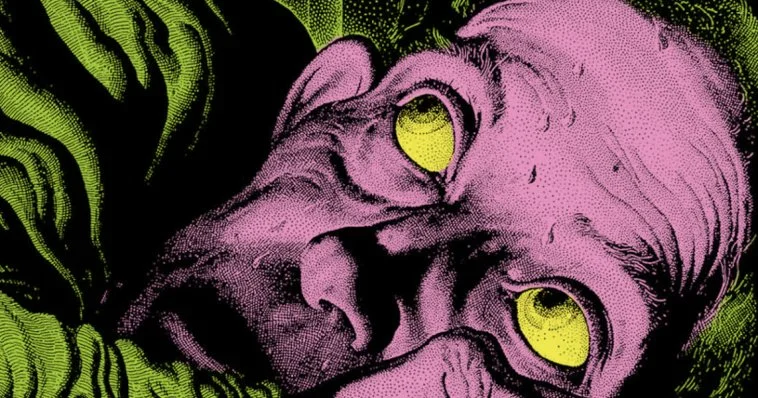
Artwork: Virgil Finlay.
The Veilstone setting for Shadowdark RPG is meant to be much more than a Wild West frontier hack for the Shadowdark rules. It is, first and foremost, Gothic Horror set in the American West, as opposed to the genre’s more expected haunts of Victorian London or grim, archaic New England.
It says it right on the tin:
A Gothic Western.
We have the setting. We have the monsters. But we are still missing the one thing that truly makes a horror RPG work: a fear mechanic that imposes itself upon the characters and the world. One that grinds them down if they are not careful.
Because we are designing this content for an OSR game and the OSR community, I have been heavily inspired by two monumental works from my youth: Call of Cthulhu 5th Edition and the 2nd Edition Ravenloft Campaign Setting.
These playtest rules are deeply inspired by both of those games. I feel I have arrived at a system that makes horror in Shadowdark tangible: the deterioration of a character under fear, the Trauma they carry, and the redemption they might find if they seek healing before madness takes them completely.
These rules will appear in our third release for Veilstone:
Veilstone Nickel Library No. 1: Broken Hearts Want Blood
This zine will be filled with a variety of new content, including rules, adventures, lore, locales, and more.
Fear, Terror, and Horror
The Veil does not only kill with claws, bullets, and bad luck. Some things break the nerve before they break the body.
The GM calls for a Fear check when characters face overwhelming danger or witness something dreadful. The cause of the check is either Terror or Horror.
Do not call for a Fear check every time the characters see a monster. Use it when the threat is new, personal, unnatural, or clearly beyond them.
Fear Check
Roll: 1d20 + WIS modifier + modifiers
If a character has a talent, class ability, spell, item, or other effect that protects against fear, that effect takes precedence.
On a failed Fear check, the character gains 1 Trauma and suffers the effect of either Terror or Horror, depending on what caused the check.
Fear DCs
Easy, DC 9: The creature’s level is lower than the party’s total level, and the party can harm it.
Normal, DC 12: The creature can kill a character in one attack or remove a character from the fight with an ability.
Hard, DC 15: The creature’s level is higher than the party’s total level.
Extreme, DC 18: The characters have no weapons, spells, or tools that can harm the creature.
Fear Check Modifiers
+2 The party has spells, items, lore, or tools specifically useful against the threat.
+1 Allies are endangered by the threat.
+1 The party has faced this same kind of threat since their last rest.
-2 The character was defeated by or fled from this kind of threat before.
Terror
Terror is immediate danger: the charging beast, the thing in the dark, the dead man rising with your name in his mouth.
Use Terror when a character is hunted, ambushed, trapped, overmatched, or facing a threat that is about to kill them.
On a failed Fear check caused by Terror, the character is terrified.
Terrified
You must flee from the source of terror by the most direct route.
If you cannot flee, you fight with disadvantage.
You can’t make another Fear check to end this effect until you are out of sight of the source of terror.
Once out of sight, make a Fear check at the start of each of your turns. On a success, the effect ends.
Horror
Horror is revulsion, grief, or awful realization: the body in the well, the town skinned clean, the truth behind the kindly preacher’s smile.
Use Horror when a character witnesses mutilation, mass death, profane rites, a beloved place defiled, or the true nature of something monstrous.
On a failed Fear check caused by Horror, the character is horrified.
Horrified
For 1 round, you may either move or take an action, not both.
Then roll on the Horrified table.
Horrified Table
Aversion. You cannot willingly approach or look directly at the source of horror. If forced within near range or made to face it, make a DC 12 Fear check caused by Terror. Lasts until you complete a rest.
Revulsion. You gag, shake, or freeze. You have disadvantage on actions while in line of sight of the source of horror. Lasts until you complete a rest.
Obsession. The horror loops in your mind. Until you complete a rest., you cannot use Luck tokens.
Senseless Rage. You must attack or destroy the source of horror if able. You have advantage on attacks against it for 3 rounds. Afterward, you have disadvantage on all actions for 3 rounds
Frozen Fear. You can’t move or take actions for 1d4 rounds. Afterward, you act normally.
Terror-Struck. Immediately make a DC 15 Fear check caused by Terror.
Hysterical blindness. Your mind overrides your sight to avoid the horror. You have disadvantage on tasks requiring sight until you complete a rest.
Fainting Fit. You fall unconscious for 1d6 rounds or until you take damage or are vigorously awoken.
Hysterical Laughter. You laugh, weep, pray, or babble maniacly. You cannot cast spells or use class talents for 1d4 rounds.
Blame Spiral. You fixate on one ally as the cause. Until next rest, you have disadvantage on actions involving that ally. If they are harmed, make a DC 12 WIS check or lash out verbally or physically.
Visceral Revulsion. Your body rejects what the mind sees. You begin vomiting uncontrollably for 1d4 rounds you may move but take no actions, any creatures close to you at the start of your turn are spattered with Vomit: roll 1d6 on a 1 they slip in it and fall prone.
Staring Into It. You cannot look away. Lose your next action. Afterward, gain advantage on your next check or attack involving the source of horror.
Trauma
Each failed Fear check gives the character 1 Trauma. Trauma measures madness, grief, and spiritual damage carried by the character.
Each point of Trauma gives a -1 penalty to reaction and CHA checks .
PCs who roleplay their growing madness, haunted nerves, or spiritual wounds during social encounters should be rewarded with Luck tokens.
Trauma Thresholds
1–2 Trauma: No Derangement.
3 Trauma: Gain one Minor Derangement.
6 Trauma: Gain one Major Derangement.
10 Trauma: The Horrors of the Veil have driven you Insane. The GM takes control of your character as an NPC.
Derangements
The horrors of the Veil and the violence of the road tear at the soul, picking away at the mind like a greedy miner working a doomed claim. Those who do not seek mental or spiritual aid may, over time, develop disturbing maladies as madness slowly consumes their minds and souls.
Derangements are long-term afflictions and are treated as curses. They remain until removed by Convalescence, powerful magic, or another method approved by the GM.
The GM is advised to actively engage with player derangements to enhance the experience of PCs losing control of their sanity, and should reward PCs that actively roleplay their derangements with Luck tokens.
Reducing Trauma does not automatically remove a Derangement.
Minor Derangements
Roll 1d12.
Night Terrors. After a rest, roll 1d6. On a 1, you regain 1d6 fewer HP from that rest.
Spooked. You have disadvantage on initiative checks.
Verminous Appetite. You cannot stomach normal food and gain no benefit from it. You crave the flesh of vermin.
Open Sky Terror. Wide open spaces feel lethal. In open areas, you have disadvantage on checks unless you are near a wall, tree line, wagon, or other cover.
Claustrophobic. Tight spaces feel like graves. To enter or remain in a tunnel, cave, coffin, cell, or crawlspace, make a DC 12 Fear check caused by Terror.
Blood Vision. You see blood everywhere. You have disadvantage on checks to stabilize creatures, but advantage on checks to track wounded creatures.
Compulsive Counting. You count steps, bullets, teeth, boards, candles, or other small things. During combat, at the beginning of your turn, make a DC 9 WIS check. On a failure, you lose your action counting something that has caught your eye.
Mirror Dread. When you see your reflection, something else stares back. When looking into a mirror, still water, glass, or polished metal, make a DC 12 Fear check caused by Terror.
Paranoid Reading. You hear hidden meanings and threats in every word. You have a deep mistrust of strangers and have disadvantage on checks with merchants, but gain advantage on WIS checks to detect ambushes or betrayals.
Fading Husk. You feel your body fading away into the Veil. Your movement is halved unless you spend an action grounding yourself by touching your own face, hands, weapon, or shadow.
Ritual Fixation. You are compelled to complete the ritual. The ritual keeps you safe. The ritual keeps you strong. Once per hour, you must perform a small ritual as an action. If prevented, you have disadvantage on your next action.
Nervous Chatter. You can’t stop yammering on. Anything to keep away the terrifying silence. You have disadvantage on stealth checks.
Major Derangements
Roll 1d12.
Guardian. You believe an entity has attached itself to you and now watches over your fate. Roll 1d6: 1. Demon 2. Angelic guardian 3. Elder star god 4. Tormented spirit 5. Lost god 6. Dark Doppelganger. Once per rest, the GM may have the Guardian whisper a command, message, warning, or omen. If you obey it, gain a Luck token. If you refuse it, you have disadvantage on your next WIS check or Fear check.
Chronic Paranoia. You believe a cabal has agents everywhere: in every town, every saloon, and even your own camp. Decide the cabal with the GM. When you interact with an NPC or party member, make a DC 12 WIS check. On a failure, choose one person present. You believe they are part of the conspiracy and won’t willingly trust or aid them until they prove themselves or you finish a rest.
Veil Echoes. There’s a voice in your head, and you’re listening. At the start of your turn, roll 1d6. On a 1, you spend your action listening.
Joy Killer. Violence feels holy and beautiful. When combat ends, make a DC 12 WIS check. On a failure, you must attack the nearest creature. At the start of each of your turns, you may repeat the check. On a success, the rampage ends.
Shattered Persona. Each time you enter a new place, conversation, or encounter, your persona shifts. Roll 1d6: 1. Fearfully timid 2. Boastfully arrogant 3. Silently apathetic 4. Vengefully fragile 5. Drunken revelry 6. Murderous
Objectification. You speak to your gear as if it were alive, and it speaks back. Pick one item you own and give it a personality(sdrpg p.294-5). You trust it more than anyone else in the world. If the item is lost or broken, you fall into a catatonic state for 1d6 hours before another item you own begins to speak to you.
Time Stutter. You believe time is repeating. Once per rest, after you see a creature make a roll, you may force that creature to reroll. Afterward, take 1 WIS damage.
Identity Swap. You believe you are someone else: a dead ranger, a saint, a beast, a wanted outlaw, or a name whispered by the Veil. You believe this so thoroughly that you do not answer to your old name unless an ally succeeds on a DC 12 CHA check to reach the person buried beneath the delusion. People and agents and enemies connected to the new persona begin to show up looking for you.
Total Amnesia. After a rest, roll 1d6. On a 1, you forget the last 1d4 days. Your memories of that time are foggy and out of reach. Allies can tell you what happened, but the memories are truly gone.
Kleptomaniac. You’ve got a bad bug for shiny baubles, items behind the counter, and other people’s horses. When in town, traveling with others, or dealing with strangers, some item catches your eye. Make a DC 15 WIS check. On a failure, you must attempt to steal it or obsess over it until you have.
Doomed. You believe every path leads back to ruin. You see no need for subtlety and rush headlong into danger. You refuse to retreat unless an ally succeeds on a DC 12 CHA check to talk you down.
Goremonger. You have found a grim pleasure in taking trophies from your battles: ears, heads, scalps, fingers, teeth, or faces. You display them with pride.Townsfolk shun you and lawmen watch you. You also believe consuming the flesh of your foes gives you power. Once per day, if you consume the flesh of a defeated foe, gain a Luck token. These compulsions are powerful. When given the chance to take a trophy or consume flesh, make a DC 15 WIS check to resist. If you willingly give in, your alignment changes to chaotic.
Convalescence
Characters who brave the darkness will over time slowly lose their minds as they expose themselves to the horrors of the valley.
trauma, Major, and Minor Derangements can be Healed with convalescence and spiritual magics.
A character who wishes to rid themselves of trauma may seek to spend downtime in Convalescence instead of Carousing. To Convalesce, each participant pitches in for the cost of the event. Then, each participant rolls 1d8 + the event's bonus to determine their own outcome.
Asides from Convalescing, several Priest and Spirit Guide spells can rid a character of Derangements: Restoration and Cleansing respectively.
Convalescence Events
$0 - A night of solemn counsel in the local Chapel - +0
$50 - A full day Guidance and peace administered by the local Brethren or Indigenous Wise woman - +1
$75 - 2 days of Esoteric Spiritualist exorcisms and channeling procedures administered by the Fellowship of Celestial Harmony - +2
$250 - 5 days of Hallucinogenic Journeys with a traveling mystic “man of Knowledge” - +3
$375 - A painfully cathartic and electrifying week of galvanic and faradic electro therapy - +4
$625 - A Ten days of quiet time, health living, and Daily Sessions of the “Talking Thereapy” with a local Psychiatrist - +5
$1250 - Two weeks of of spirit work, Walking in the Dream time culminating in a Sweat lodge and meeting your own inner spirit with a indigenous band’s Medicine Man - +6
Convalescence Results
Roll 1d8 + your Convalescence Bonus from the Event table. trauma cannot go below 0.
1. Barely holding it together. You sit nervously through your counsel, but the horror is still in your bones. Remove 1 trauma, gain 1 XP.
2. Coffee and scripture. Hot Coffee, worn pews, and a priest or wise woman who actually listens. Remove 2 trauma, gain 2 XP.
3. Smoke and sweat. The sweat lodge, tobacco smoke, and low chanting pull some of the poison out of you. Remove 2 trauma, gain 2 XP.
4. Tonic and rest. Bitter tonics, clean sheets, nothing claws at the door, or whispers from the well. Remove 2 trauma, gain 2 XP.
5. Facing the ghost. You finally speak aloud the thing that has been crawling through your skull since you returned from the darkness. Remove 3 trauma or a Minor Derangement, gain 3 XP.
6. Letting go of the dead. You light a candle, leave an offering, or say the name you have avoided. Remove 3 trauma or a Minor Derangement, gain 3 XP.
7. The doctor’s questions. Step by step a frontier physician or local medicine man walks you back through the worst of it. Remove 3 trauma or a Minor Derangement, gain 3 XP, and gain 1 Luck Token.
8. Walk the path with heart. In trance, fever, or prayer, you see yourself from outside and realize you survived. Remove 3 trauma or a Minor Derangement, gain 3 XP, and gain a Spiritualist ally
9. Hands on your head. Prayer circle, laying on of hands, or painted palms on your shoulders. Your spirit lifts from the depths of despair. Remove 4 trauma or a Minor Derangement, gain 4 XP, a visiting Philanthropist give you $20 Bucks to help you get back on your feet
10. Cleansed in the lodge. Steam, songs, and spirits strip you down to your raw soul and leave you lighter.
Remove 4 trauma or a Minor Derangement, gain 4 XP, When you come to this location again to convalesce you will get a +1 on your roll
11. The scalpel of the mind. A stern psychiatrist or “man of knowledge” cuts away one festering thought cleanly.Remove 4 trauma, a Minor Derangement, gain 4 XP, You gain the confidence of a prominent Alienist who will vouch for your character and may offer you shelter.
12. The Valley loses its grip. You dream of what you saw out there and for the first time you turn your back on the terror. Remove 4 trauma, a Minor Derangement, gain 4 XP, You gain an ally of the Holy Faith, they give you a silver holy symbol when you depart.
13. Walked back from the brink. For a little while, with help, you are simply human again and not a shadow of the Veil. Remove 5 trauma, a Minor or Major Derangement, gain 5 XP, you are welcomed by a local Indigenous band as a spiritual member, they and their leader will shelter you and lend you aid
14+ . Touched by grace. By saints, spirits, or sheer stubborn will, something in you is set back in place that you thought would never return. Remove 5 trauma, a Minor or Major Derangement, gain 6 XP, gain a magic item from your treasure table.
Design Notes
These rules do add a level of complexity to the game of Shadowdark, but in the spirit of creating an authentic OSR horror game using the Veilstone: A Gothic Western setting, I believe the implementation is rather simple. The majority of the new mechanics will be tracked and adjudicated by the GM, so yes, it is more work for the GM. As usual, burdens must be abided.
All players need to track is their current Trauma score and roleplay that score, along with any Derangements they have picked up. Remember that the Trauma score applies a negative modifier to reaction checks, so even without a Derangement, the mechanic is telling you that you are unwell.
The real fun of the system is in roleplaying these states. The GM should openly encourage players to do so when describing the mechanic. Good roleplay, especially when players portray their characters according to their mental state and not to their own benefit, should be rewarded with Luck and 1 XP, similar to being rewarded for clever thinking.
Through smart play and preparedness, parties can mitigate the level of Trauma they gain. Convalescence does not reward as much XP as standard carousing, but it does have its own set of rewards that bolster characters for future encounters.
In the end, characters will be ground down by the bleak horror of the Haunted Valley. The struggle to survive should not just be physical, but mental and spiritual as well.
Though these rules are flavored for Veilstone’s haunted boomtowns and mist-smothered canyons, they can easily be reskinned for any other setting you wish to throw them into.
I hope you can find some use for these rules at your table. If you do, I would love to hear how your experience running them went.
Thank you!